
QNetworks Workshop 2026
Connecting global leaders to shape the future of a quantum networked world
This event has now passed. Thank you to our speakers for providing engaging and informative talks, and to our delegates for attending and participating in the various discussions. If you would like to read more on the conference, please read our news post here. A gallery of a selection of photos from the event is below.
QNetworks will be here once more in 2028! We look forward to seeing you then. In the meantime, keep an eye out for news on our upcoming Summer School.
Gallery


About
QNetworks is a two-day international workshop organised by the Integrated Quantum Networks (IQN) Hub, the UK’s flagship national programme for quantum networks research. QNetworks invites thought leaders from similar flagship R&D initiatives across the world, and brings together key governmental and industry voices to discuss the challenges, solutions, and partnerships required to deliver the next generation of quantum networks.
This year’s event will take place in person at Bristol on 12-13 May, 2026, and will be free to attend thanks to support from the Engineering and Physical Science Research Council (EPSRC).
Sessions will cover recent developments on quantum memories; integrated photonics for quantum networking, enabling technologies and field trials; the role of entanglement; post-quantum cryptography; quantum communications via satellite; networked quantum systems for distributed sensing and computing; and more.
There will be an opportunity for Early Career Researchers/PhD students to present research posters at the event. If this option is of interest, there is the option to submit a 150-word abstract during the registration process. The deadline for submissions is Friday 17th April.
Registration is now closed.
Venue
Bristol Aquarium, Anchor Rd, Bristol BS1 5TT
QNetworks 2026 will be hosted at the Bristol Megascreen, located within the Bristol Aquarium. This former IMAX cinema is ideally located in central Bristol and will provide an outstanding conference venue with its tiered 300 seater auditorium, huge 19x15m screen and professional Dolby audio.

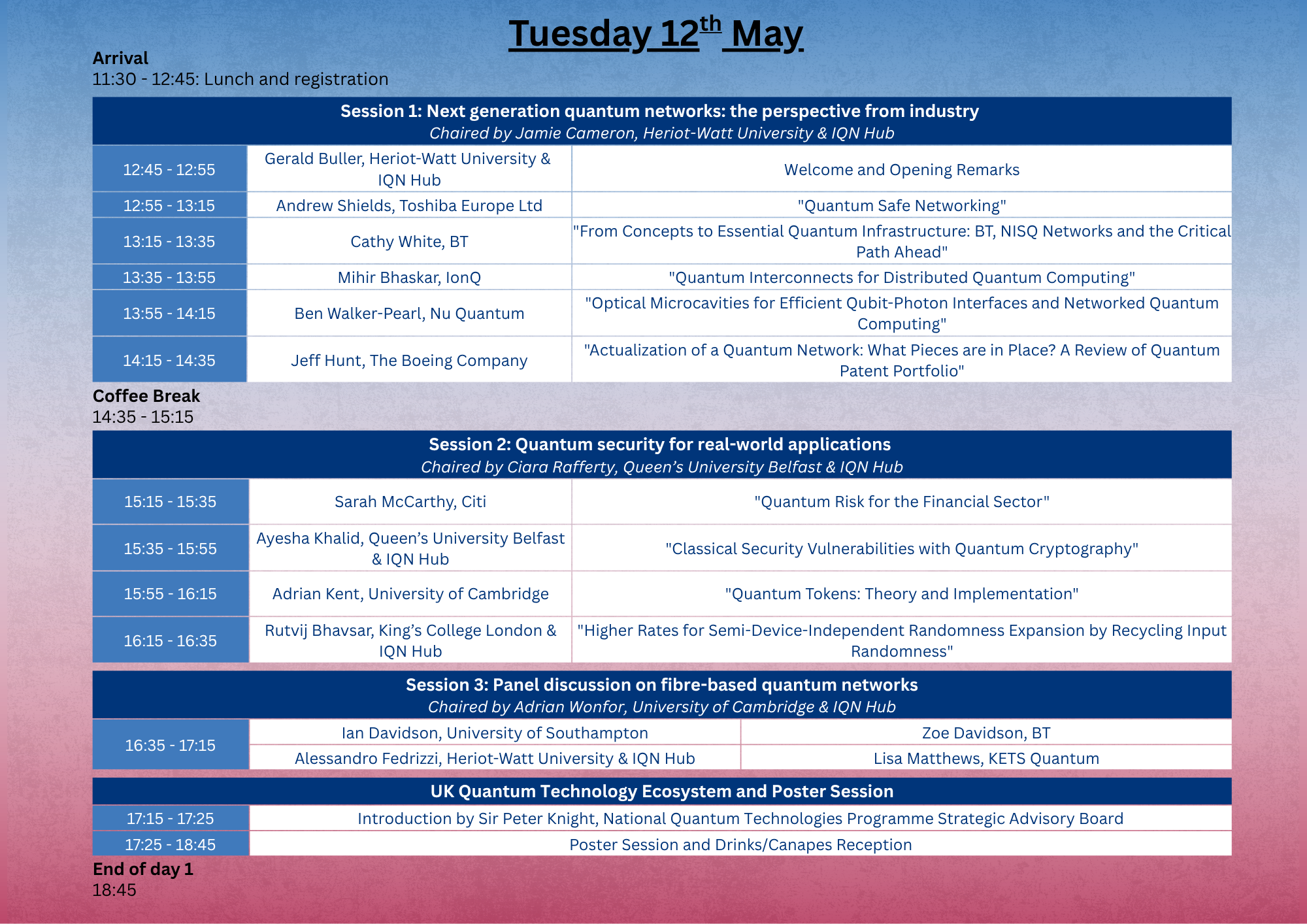
Programme

Speakers
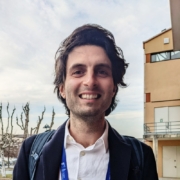
Dr Davide Bacco
Associate Professor
University of Florence
Davide Bacco is an Associate Professor at the University of Florence and co-founder of QTI s.r.l., Italy’s first company commercializing quantum communication systems. Trained in telecommunications engineering at the University of Padova, his research focuses on quantum communications, quantum cryptography, and integrated photonics, bridging academic research with real-world quantum technology innovation.

Dr Mihir Bhaskar
Senior Vice President, Global R&D
IonQ
Dr Mihir Bhaskar has over a decade of experience in quantum technologies. In 2020, he led the first ever demonstration of quantum networking rate enhancements using diamond color-center quantum memory technology he pioneered during his PhD at Harvard. Before joining IonQ, where he currently serves as Senior Vice President of Global R&D, he was CEO and Co-Founder at Lightsynq Technologies, a startup commercializing memory-enhanced quantum interconnects, acquired by IonQ in 2025. Prior to Lightsynq, he launched and served as research lead at the Amazon Web Services Center for Quantum Networking from 2021-2024.
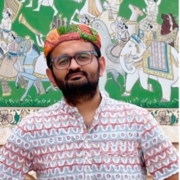
Dr Rutvij Bhavsar
Research Associate
King’s College London
Rutvij Bhavsar is a Research Associate in the Department of Mathematics at King’s College London, working primarily on Quantum Information Theory and Quantum Cryptography. His research focuses on translating foundational aspects of quantum theory into practical applications, in particular developing highly secure cryptographic protocols based on Bell non-locality.
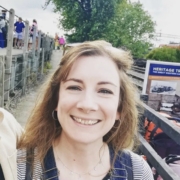
Jennifer Bosher
Senior Systems Engineer
STFC RAL Space
Over 12 years in the engineering industry, with 10 of those specifically within the space sector, my expertise lie in the engineering behind putting innovative technology in space, from defining the performance requirements, establishing the operational environment, through to qualification and acceptance testing of hardware. I’ve worked on missions from the BepiColombo mission to mercury, and the larger Sentinel satellites on the Copernicus programme, through to the small satellite world of the SPOQC mission. Focussing on the instrumentation on the larger missions, through design to testing, and encompassing the entire satellite and integration with the smaller satellites, leading engineering partners and academic teams through development stages and through to launch and operations.
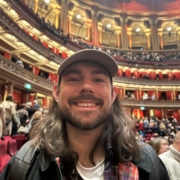
Dr Paul Burdekin
Senior Research Fellow
University of Oxford
Paul’s research centres on atom–light interactions and the development of warm vapour quantum memories for scalable quantum networks. At Oxford, he works with Professor Ian Walmsley at the Oxford Quantum Institute to develop broadband, telecom-compatible memory platforms.
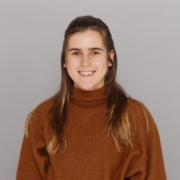
Dr Chloe Clear
Senior Quantum Engineer
Photonic Inc.
Dr Clear is a Senior Quantum Engineer at Photonic Inc specializing in silicon-based quantum computing, with a background in the theory of solid-state quantum emitters. Her work focuses on modelling the characteristics of spin-photon qubit devices to enable the realization of high-fidelity qubit platforms and to advance the development of scalable, fault-tolerant quantum technologies.
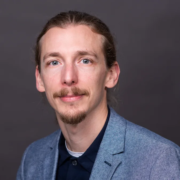
Dr Dorian Gangloff
Royal Society University Research Fellow and Associate Professor of Quantum Technology
University of Cambridge
Dr Dorian Gangloff’s expertise lies in solid-state spin-photon interfaces, particularly semiconductor quantum dots and colour centres, for quantum networks. Within the IQN Hub, he contributes leadership in quantum memories, qubit control, and spin-photon entanglement.
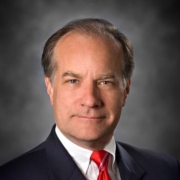
Dr Jeffrey Hunt
Senior Technical Fellow
The Boeing Company
Dr Jeffrey H. Hunt is a Senior Technical Fellow of The Boeing Company. Dr Hunt has published numerous technical papers, including 168 US patents, a number in the quantum technologies arena. Dr Hunt is a fellow of the American Physical Society and Optica. As an Industrial Physicist, Dr Hunt’s interests extend from the basic quantum sciences into the applications space. He will be sharing his knowledge in quantum arena, particularly in the application of those technologies to the aerospace sector.
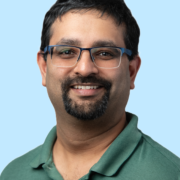
Dr Siddarth Joshi
Senior Lecturer in Optical Communications
University of Bristol
Siddarth K Joshi leads the quantum communication research group at the University of Bristol. He has pioneered multiplexed entanglement distribution quantum networks. He has also worked extensively on QKD satellites and optical ground stations.
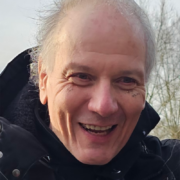
Professor Adrian Kent
Professor of Quantum Physics
University of Cambridge
Adrian Kent is Professor of Quantum Physics at DAMTP, University of Cambridge and a Distinguished Visiting Research Chair at Perimeter Institute. His contributions to quantum cryptography include the first relativistic protocols for bit commitment and new practical schemes for secure quantum money token, as well as the co-invention of quantum position verification, quantum randomness expansion, and quantum key distribution with security based on no-signalling. He is UK PI of the UK-Canada Quantum Networks in Theory and Practice collaboration.
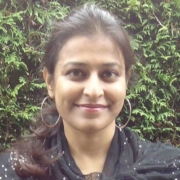
Dr Ayesha Khalid
Senior Lecturer
Queen’s University Belfast
Dr. Ayesha Khalid is a Senior Lecturer at the Centre for Secure Information Technologies (CSIT) at Queen’s University Belfast (QUB). She leads the research in Post-Quantum Cryptography (PQC), with focus on the design, optimization, and implementation of quantum-secure cryptography hardware, particularly for embedded devices. She is a senior member of IEEE and a co-I in the EPSRC IQN hub project.
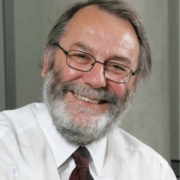
Sir Peter Knight
National Quantum Technologies Programme Strategic Advisory Board Chair
Innovate UK
Sir Peter Knight is a physicist renowned for his pioneering research into quantum optics. His forty years of work on the nonclassical properties of light and the theoretical underpinnings of quantum computing have established him as an influential figure within the wider UK physics community. He currently chairs the UK National Quantum Technologies Programme Strategic Advisory Board.
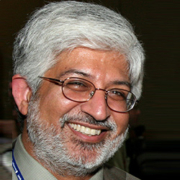
Professor Prem Kumar
Professor of Electrical and Computer Engineering
Northwestern University
Prem Kumar is Professor of Information Technology in the McCormick School of Engineering at Northwestern University. His research focuses on quantum photonic devices and their applications in quantum information networks. He is a Fellow of Optica (formerly OSA), APS, IEEE, IoP (U.K.), AAAS, and SPIE. During 2013-2017 he was at DARPA, where he created and managed a portfolio of programs in basic and applied sciences. From 2020 to 2025, he served as Editor-in-Chief of Optica, the flagship journal of the Optica Publishing Group. Currently, he co-chairs the US National Academies Committee on Atomic Molecular and Optical Physics.
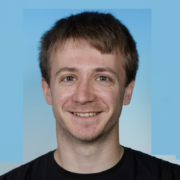
Dr Viktor Krutianskii
Postdoctoral Researcher
University of Innsbruck
Viktor Krutianskii is a senior investigator at the Distributed Quantum Systems research group, University of Innsbruck. His particular expertise is on trapped ion quantum networks and is also involved in the Quantum Internet Alliance project.
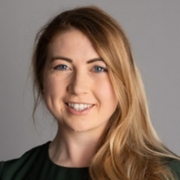
Dr Sarah McCarthy
Deputy Lead, Quantum Readiness Program
Citi
Sarah McCarthy, a leading expert in quantum-safe cryptography, champions Citi’s Quantum Readiness Program. She obtained a PhD from Queen’s University Belfast, is an affiliate of the Institute for Quantum Computing at the University of Waterloo and sits on the steering committee of Europol’s Quantum Safe Financial Forum. Her work, spanning from developing quantum-safe network solutions to co-ordinating stakeholders towards a secure migration, focuses on securing financial systems against quantum threats.
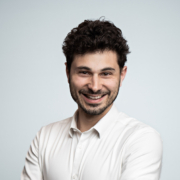
Dr Thomas Nieddu
Senior Business Developer
Welinq
Thomas is a quantum physicist turned business developer, with a PhD from OIST and direct experience building the technology he now brings to market. As Senior Business Development Manager at Welinq, he drives strategic partnerships, European programs, and ecosystem positioning at the frontier of quantum networking.
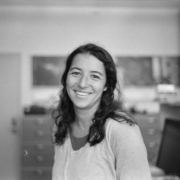
Dr Natalie Pearson
Quantum Technology Lead
Craft Prospect
At Craft Prospect Natalie leads the Quantum Technology team which works to deploy quantum systems on small satellites. They are primarily focused on quantum communication and have delivered QKD sources and receivers for satellite based QKD. Beyond quantum comms they are further interested in quantum sensing and distributed entanglement applications.
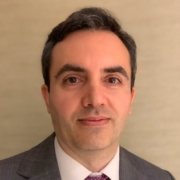
Professor Mohsen Razavi
Professor of Quantum Communications
University of Leeds
Mohsen Razavi is a leading expert in quantum communications at the University of Leeds. His research spans quantum key distribution and its security, quantum networks, and quantum repeaters. He has coordinated major initiatives such as the European QCALL network. He is the author of an introductory book on quantum communications networks.
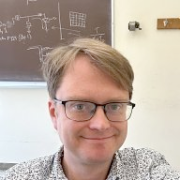
Dr Matt Shaw
Senior Research Scientist
NASA Jet Propulsion Laboratory
Matt Shaw is a Senior Research Scientist and the supervisor of the Superconductive Materials and Devices group at JPL, which specializes in the development of a variety of superconducting detector technologies in support of NASA science goals. Since 2012, he has been leading the development of superconducting nanowire single photon detectors at JPL and developing technology for deep-space optical communication. He also holds a visiting research affiliation at Caltech.
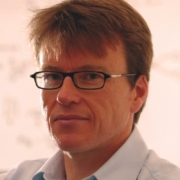
Dr Andrew Shields
Vice President
Toshiba Europe Ltd.
Andrew Shields is Vice President of Toshiba Europe and leads their Quantum Technology Business Division, with a mission to commercialization of quantum networking products. His research interests include quantum communications and semiconductor sources of entanglement, fields in which he has 500+ publications, 30,000+ citations (H-index 88), and over 130 patents. Shields is a Fellow of the Royal Academy of Engineering and has been awarded the Institute of Physics Mott Medal and Prize (2013) and Katharine Burr Blodgett Medal and Prize (2022).
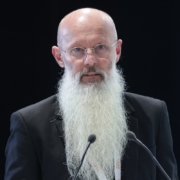
Dr Rob Thew
Senior Researcher
University of Geneva
Rob Thew is a senior researcher and group leader in the Quantum Technologies group at the University of Geneva. He is an expert in quantum communication, spanning fundamental to applied topics, and from technology development to systems integration. He was recently part of the teams that established the Geneva Quantum Centre and launched the Geneva Quantum network – a quantum research infrastructure.
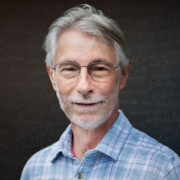
Professor Don Towsley
Director of the Quantum Information Systems Institute
University of Massachusetts Amherst
Don Towsley’s research spans a wide range of activities, from quantum and classical networking and secure communications to distributed learning and inference. He pioneered the area of network tomography and the use of fluid models for the analysis and control of large networks. More recently, he pioneered the theoretical study of covert communications and is one of the leading researchers in the area of quantum networking, where he and his collaborators have developed new routing algorithms and quantum switch designs. For his work in networking, Don has received many awards including the 2007 IEEE Koji Kobayashi Award and several lifetime achievement awards.
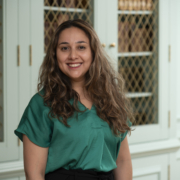
Dr Natalia Herrera Valencia
Research Associate
Heriot-Watt University / Intertangle
Dr Natalia Herrera Valencia is a quantum photonics researcher at the Beyond Binary Quantum Information Laboratory in Heriot-Watt University, establishing novel complex-media platforms to harness high-dimensional entanglement. She leads translational and commercial activities through the pre-spinout project Intertangle, developing deployable photonic systems to support scalable, robust and dynamic entanglement networks.
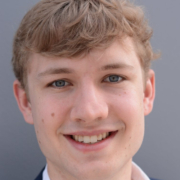
Dr Ben Walker-Pearl
Architect for Qubit-Photon Interfaces
Nu Quantum
Ben is the Architect for Qubit-Photon Interfaces at Nu Quantum, leading the development of the company’s technical roadmap in this area. For the last two and a half years, he has been part of the technical leadership, development, and delivery of optical microcavities to enable high-rate, high-fidelity photon-mediated entanglement across a network of quantum processors. The initial focus has spanned trapped ion and neutral atom qubits, with ambition to also support solid-state qubits in the future. Previously, Ben worked in technical consultancy for a wide variety of industries and disciplines at The Technology Partnership, and completed a PhD at Imperial College London, specialising in fabricating and utilising optical microcavities for photon Bose-Einstein Condensates.
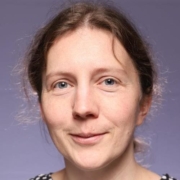
Dr Catherine White
Research Technical Manager
BT
Cathy White has worked in optical and quantum technologies at BT since 2016, contributing to the design and operation of several network pilots, including the BT–Toshiba Quantum Secure Metro Network. She is an active contributor to standards groups and industry consortia, including the BT‑led UK QAssure project, which applies modern assurance methods to build confidence in the resilience and security of telecommunications systems, with a particular focus on QKD.
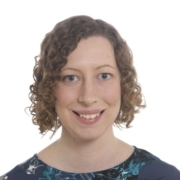
Dr Emily Williams
Instrument Delevopment Scientist
STFC RAL Space
Emily Williams has a physics background and is working in the space industry developing small satellites for in-orbit technology demonstrations. She is currently working on system integration and testing for Quantum Key Distribution demonstrator missions, as well as supporting instruments for monitoring sky brightness at satellite optical ground stations.
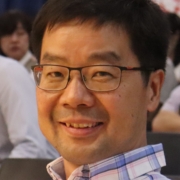
Dr Zhiliang Yuan
Chief Scientist
Beijing Academy of Quantum Information Sciences (BAQIS)
Zhiliang Yuan is Chief Scientist at BAQIS and leads the Quantum Photonics Group. His research focuses on quantum communications, including long-distance quantum key distribution, and on quantum light sources based on semiconductor quantum dots. He has made notable contributions to long-distance quantum key distribution, semiconductor quantum light sources, and practical architectures for quantum communication networks.
Panellists

Dr Ian Davidson
Senior Research Fellow
University of Southampton
Dr Ian Davidson is a Senior Research Fellow at the Optoelectronics Research Centre where he is leading efforts to develop a new generation of low-loss hollow-core optical fibres. Previously, he completed his PhD at Heriot-Watt University, in the field of semiconductor deposition and characterisation (with a focus on developing CdSe quantum dots for single-photon applications), and has worked at Stockholm and KTH Universities on superconducting single-photon detectors and (quantum) micro/nano-photonics. His current research interests include the development of low-loss UV-visible and mid-IR optical fibres and their use in a range of applications, such as sensing, power delivery, biomedicine, telecommunication, and quantum technology.

Dr Zoe Davidson
Technical Reseach Manager
BT
Zoe Davidson joined BT as a Specialist Research Professional for the Optical Networks and Quantum Research team in the Network Strategy and Research department in 2022. Her research focus is on Photonic Integrated Circuits for use in both classical and quantum networks. Zoe’s background is on semiconductor compounds for energy efficient emission in the O- and C-bands, and telecommunications fibre optic network design and deployment.
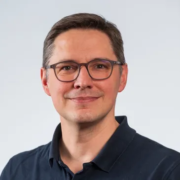
Professor Alessandro Fedrizzi
Professor of Physics
Heriot-Watt University
Alessandro is an Assistant Director of the IQN Hub and a Professor of Physics with a twenty-year track record in experimental quantum technology research. His expertise lies in the engineering of quantum light sources for applications in quantum communication, computing and metrology.
Ryan Kraliz
Director of Programmes
Lumino Technologies
Ryan Kraliz has over 20 years of experience in the space sector across crewed spaceflight, Earth observation, and satellite communications. Over the past decade, he has focused on developing quantum technologies for space applications, particularly quantum communications and networking. His work with Lumino centres on developing and applying these emerging capabilities to real-world space systems, with an emphasis on bridging the gap between research and deployment in areas like communications, security, and data infrastructure.
Dr Jay Lowell
Principal Senior Technical Fellow
The Boeing Company
Having previously been a researcher at the Defense Advanced Research Projects Agency and a professor in the U.S. Air Force, Jay is now a principal senior technical fellow at The Boeing Company, where he helps guide technical strategy and research implementation regarding disruptive emerging technologies.

Dr Lisa Matthews
Chief Executice Officer
KETS Quantum Security
Lisa Matthews is CEO at KETS Quantum Security, a quantum-safe encryption and networking company. In that role she has responsibility for delivering all areas of KETS’s strategic plans as well as for compliance across KETS’ group of companies, covering finance, people, contracts, product certification, and export control.

Dr Alex Pickston
Prinicpal Physicist
Honeywell
Alexander Pickston is a Principal Physicist at Honeywell, where he works on the development and design of quantum hardware systems, while also supporting business development on quantum initiatives.
Dr Matt Shaw
Senior Research Scientist
NASA Jet Propulsion Laboratory
Matt Shaw is a Senior Research Scientist and the supervisor of the Superconductive Materials and Devices group at JPL, which specializes in the development of a variety of superconducting detector technologies in support of NASA science goals. Since 2012, he has been leading the development of superconducting nanowire single photon detectors at JPL and developing technology for deep-space optical communication. He also holds a visiting research affiliation at Caltech.
Andrew Vick
Head of the Disruptive Space Technology Centre (DSTC)
RAL Space
Andy is a co-investigator in the IQN Hub and the Head of the Disruptive Space Technology Centre (DSTC) in RAL Space. Under his leadership, the DSTC collaborates with original inventors and end users to develop disruptive technologies that benefit UK strategic aims, particularly those of the UKRI science councils.
Accommodation
Bristol is a vibrant city offering diverse options for accommodation. Below is a selection of hotels located near the venue which accommodate a range of budgets:
Programme Committee
Dr Sima Bahrani
University of Bristol

Professor Gerald Buller
Heriot-Watt University
Dr Alex Clark
University of Bristol
Dr Marcus Clark
University of Bristol
Professor Roger Colbeck
King College London
Professor Alessandro Fedrizzi
Heriot-Watt University
Dr Daniel Oi
University of Strathclyde

Dr Ciara Rafferty
Queen’s University Belfast
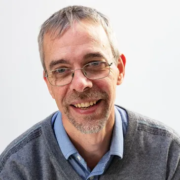
Professor Jason Smith
University of Oxford
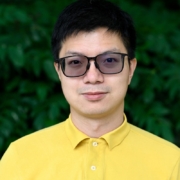
Dr Rui Wang
University of Bristol
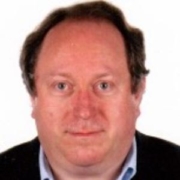
Adrian Wonfor
University of Cambridge
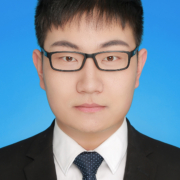
Dr Mark Yang
University of Bristol
EDI Statement
Principles of Equality, Diversity and Inclusion (EDI) are firmly embedded across all operational and governance aspects of the IQN Hub programme of work, and extend to all engagement activities, including events such as the QNetworks 2026 workshop. We are committed to ensuring that our conference is inclusive and accessible to all. Registration is free and travel bursaries are available for those without access to other sources of funding (UK travel only). Assistive technologies will be in place to ensure that all participants can take part fully. A quiet space will be available for attendees who need a calm area to take a break and refocus.
In selecting speakers, we seek to represent a diverse range of backgrounds, career stages, disciplines, and perspectives.