The UK Integrated Quantum Networks Hub
  • Home
  • Research
    • Quantum Memories
    • Dynamic Networking and Entanglement Distribution
    • Satellite Quantum Communications
    • Quantum Components
    • Quantum Protocols and Networking Theory
    • Quantum-safe Secure Communication & Standards
  • Partners
  • People
    • Leadership Team
    • Research Team
    • Operations Team
  • News
  • Events
  • QNetworks 2026
  • Contact
  • Menu Menu
Abstract global network image - for decoration only

Colt joins the Integrated Quantum Networks Hub fold!

11 July, 2025

The UK’s Integrated Quantum Networks (IQN) Hub announces today that it will be partnering with Colt Technology Services (Colt), the global digital infrastructure company.  The IQN Hub is  a £20m+ R&D initiative which connects academia, government and industry to advance quantum-secure communications technologies. Joining a collaboration of 15 leading British Universities and National Laboratories, plus nearly 50 other companies from across the telecommunications, quantum technology, cybersecurity, digital services and space sectors, Colt will contribute its leading expertise in global digital infrastructure and connectivity services to the Hub’s research programme.

The new partnership will deepen collaboration between Colt and the UK’s leading quantum communications researchers on addressing the security and networking challenges posed by a post-quantum future. The fast-approaching realisation of a functional, fault-tolerant quantum computer will dramatically alter the global cybersecurity landscape, essentially rendering classical cryptographic security methods obsolete. This partnership will focus on building and demonstrating new and cutting-edge quantum-secure communications methods which can be deployed, at scale, throughout existing networks. This will support the ‘defence-in-depth’ strategy adopted by Colt as part of their journey towards providing fully quantum-safe data services across their global network.

The Integrated Quantum Networks Hub is one of five flagship quantum technology Hubs announced under the National Quantum Technologies Programme (NQTP), a £2.5 billion investment over the next 10 years aiming to position the UK as a world-leading quantum-enabled economy by 2035.

Prof. Gerald Buller, IQN Hub Director said “We are thrilled to welcome Colt as a new partner in the Integrated Quantum Networks Hub. Working closely with industry is essential if the Hub is to achieve its ambitious plans to establish a world-leading quantum network infrastructure here in the UK. Colt’s global infrastructure base, exceptional expertise in optical networks, and commitment to becoming an industry leader in quantum-secure communications all bring huge strengths to our programme. We are very excited to see what we can deliver together through this new partnership.”

Buddy Bayer, Chief Operating Officer, Colt Technology Services said, “Collaboration is critical for the UK is to fulfil its ambition of becoming a quantum-enabled economy in the near future. The IQN Hub is a launchpad for this goal, bringing together industry, government, and academia to share the talent, tools, and insights that will fast-track innovation and secure the UK’s position as a quantum leader on the global stage. We’re excited to be part of the IQN Hub and look forward to working together to accelerate progress”.


About Colt Technology Services

Colt Technology Services (Colt) is a global digital infrastructure company which creates extraordinary connections to help businesses succeed. Powered by amazing people and like-minded partners, Colt is driven by its purpose: to put the power of the digital universe in the hands of its customers, wherever, whenever and however they choose.

Since 1992, Colt has set itself apart through its deep commitment to its customers, growing from its heritage in the City of London to a global business spanning 40+ countries, with over 6,000 employees and more than 80 offices around the world. Colt’s customers benefit from expansive digital infrastructure connecting 32,000 buildings across 230 cities, more than 50 Metropolitan Area Networks and 275+ Points of Presence across Europe, Asia, the Middle East, Africa and North America’s largest business hubs.

Privately owned, Colt is one of the most financially sound companies in the sector. Obsessed with delivering industry-leading customer experience, Colt is guided by its dedication to customer innovation, by its values and its responsibility to its customers, partners, people and the planet.

Connect with Colt on LinkedIn, Instagram, TikTok and Facebook

For more information, please visit www.colt.net
 

https://iqnhub.org/wp-content/uploads/2025/07/21443217-colle-pr-20-2400x1350-1.png 1178 2158 Georgia Mortzou https://iqnhub.org/wp-content/uploads/2025/04/IQN-Logo_White-3.png Georgia Mortzou2025-07-11 13:00:032025-10-10 16:04:58Colt joins the Integrated Quantum Networks Hub fold!
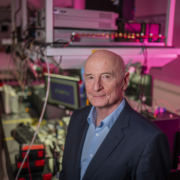
Image of a white, middle aged bald man in a science lab

NQCC Strategic Advisory Committee appointment for IQN Hub Director Buller

10 July, 2025

Congratulations to Heriot-Watt University’s Professor Gerald Buller, Director of the Integrated Quantum Networks Hub, on his recent appointment to the Strategic Advisory Committee (SAC) of the National Quantum Computing Centre (NQCC).  

The NQCC is the UK’s National Laboratory dedicated to accelerating the development of quantum computers and helping to realise their immense potential to realise new advances in healthcare, energy, climate modelling and the development of new materials. Funded through UKRI via the Engineering and Physical Sciences Research Council (EPSRC), the NQCC works closely with academics, government representatives and industry to support the growth of this emerging sector and help make the UK the world’s first quantum-ready economy.  

The Centre’s Strategic Advisory Committee will play a key role in realising this mission, helping shape the NQCC’s future direction and ensure its long-term success. 

Professor Buller joins an esteemed panel of experts in this area, including the Committee Chair, fellow IQN investigator, Professor Ian Walmsley, recently confirmed as the lead of Oxford’s Quantum Institute; Dr Michael Cuthbert, Director of the NQCC; Mr Jonathan Legh-Smith, Executive Director for UKQuantum, a membership organisation representing the UK’s quantum industry; Professor Dominic O’Brien, Director of the national technology Hub in quantum computing (QCi3); Professor Julia Sutcliffe from the UK Government’s Department of Business and Trade; Mr Simon Andrews, Executive Director of  Fraunhofer UK Reseach; and Dr Angeli Mőller from tech strategy and business innovation company Zühlke.  

Professor Buller’s expertise in quantum communications and networking technology is reflected in his leadership of the £22M EPSRC-funded national Hub in integrated quantum networking technologies (IQN Hub), funding for which was announced last summer. The IQN Hub is a major UK-wide collaboration of 13 Universities, 2 national laboratories and over 50 industry partners. It is working to enable a secure quantum networking infrastructure at all distance scales, ranging from localised quantum computing networks through to satellite-based intercontinental communications all the way to establishment of a secure quantum “internet”.   

Full details on the newly formed NQCC Strategic Advisory Committee can be found at Strategic Advisory Committee – NQCC

https://iqnhub.org/wp-content/uploads/2025/07/Watt-Media-Ltd0006-1-scaled.jpg 1703 2560 Georgia Mortzou https://iqnhub.org/wp-content/uploads/2025/04/IQN-Logo_White-3.png Georgia Mortzou2025-07-10 10:20:522025-07-11 10:22:33NQCC Strategic Advisory Committee appointment for IQN Hub Director Buller
White text against red background reading Royal Society Summer Science Exhibition

SAVE THE DATE: Royal Society Summer Science Exhibition

8 May, 2025

To celebrate this special International Year of Quantum, our Integrated Quantum Networks Hub researchers will be participating in the Royal Society’s Summer Science Exhibition in a specially installed Quantum Zone!

Join us at the Royal Society in London (6-9 Carlton House Terrace, London SW1Y 5AG) between the 1st and 6th of July to find out more about the exciting research and innovation in quantum technologies that is being carried out by academia, industry and government across the UK. The full exhibit includes the following areas:

  • Quantum building blocks: What is quantum? What is a qubit? Explore these questions and more. Here you can learn about the core concepts behind quantum science and technology through interactive activities about components used to build different quantum technologies.
  • Building quantum technologies: Learn how scientists and researchers use quantum concepts and components to build different technologies. From quantum chips to quantum sensors, you’ll discover a range of quantum technologies being developed by researchers across the UK.
  • Quantum in the real world: Explore how quantum technologies are currently impacting our lives and how they may impact them in the future. Whether you’re interested in healthcare, climate, finance or beyond, you can explore how quantum technologies are relevant to you.

The IQN Hub will join the other Quantum Technology Hubs, National Quantum Computing Centre, Quantum Software Lab, National Physical Laboratory and other key stakeholders from the UK’s thriving quantum community to showcase its SPOQC (Satellite Platform in Optical Quantum Communications) space mission, scheduled for launch later this year.

Attendance is free. To find out more about the full programme of events, visit Summer Science Exhibition 2025 | Royal Society

https://iqnhub.org/wp-content/uploads/2025/05/Screenshot-2025-10-10-153204.png 751 1501 Georgia Mortzou https://iqnhub.org/wp-content/uploads/2025/04/IQN-Logo_White-3.png Georgia Mortzou2025-05-08 11:43:502025-10-10 15:39:15SAVE THE DATE: Royal Society Summer Science Exhibition

SAVE THE DATE! Quantum Cyber Security: From Quantum Networks to Quantum Computers workshop

8 May, 2025

The Integrated Quantum Networks Hub is proud to be sponsoring the Quantum Cyber Security: From Quantum Networks to Quantum Computers workshop, part of the Quantum Fringe programme of events, co-organised by Hub partners Quantum Software Lab (University of Edinburgh) and the National Quantum Computing Centre.

The workshop aims to bring together researchers exploring quantum computing and cryptographic security, focusing on post-quantum cryptography and quantum functionalities with computational security; and quantum networks and their cryptographic applications. It will take place as an in-person event in central Edinburgh (Informatics Forum, The University of Edinburgh, 10 Crichton Street Edinburgh EH8 9AB) on the 3rd and 4th of June.

Hub speakers include Professor Roger Colbeck (University of York), Dr Mina Doosti (QSL, The University of Edinburgh) and Professor Alessandro Fedrizzi (Heriot-Watt University).

Registration is free.

For more information and to register to attend, visit Quantum Cyber Security: From Quantum Networks to Quantum Computers Tickets, Tue, Jun 3, 2025 at 9:00 AM | Eventbrite

https://iqnhub.org/wp-content/uploads/2025/05/Screenshot-2025-10-10-151328.png 632 1502 Georgia Mortzou https://iqnhub.org/wp-content/uploads/2025/04/IQN-Logo_White-3.png Georgia Mortzou2025-05-08 11:09:542025-10-10 15:18:59SAVE THE DATE! Quantum Cyber Security: From Quantum Networks to Quantum Computers workshop
3d model drawing of the Hub Optical Ground Station

Open for business: Heriot-Watt University unveils new £2.5M quantum-enabled Optical Ground Station

2 May, 2025

UK businesses invited to use world-class quantum facility to develop next-generation secure communications  

May 2nd, 2025

A cutting-edge £2.5 million facility that will help secure next-generation communications against cyber threats officially opened today at Heriot-Watt University’s Research Park in Edinburgh, Scotland.  

The Quantum Communications Hub Optical Ground Station (named HOGS) represents a significant leap forward in the UK’s space and quantum capabilities. Using advanced laser technology to communicate with satellites in ways that could make data breaches a thing of the past, HOGS marks a transition from traditional radio frequency communications to optical links that offer significantly higher data rates and improved security.  

The societal benefits extend far beyond academic research and business applications. For the public, the facility’s work will directly contribute to more secure everyday transactions ranging from online banking to health data protection, with the potential to create networks that cannot be hacked. 

The facility will shortly add state-of-the-art single-photon detectors and adaptive optics systems capable of exchanging quantum-encrypted information with orbiting satellites. This technology could eventually form the backbone of an ultra-secure quantum internet within the UK. 

Beyond its cybersecurity focus, the facility will monitor and track space debris which is a growing concern as Earth’s orbit becomes increasingly congested. The facility will also pioneer new techniques in high-speed optical communications that could power future 6G networks and beyond. 

Dr Ross Donaldson, project lead from Heriot-Watt University’s Institute of Photonics and Quantum Sciences, said: “This facility represents a quantum leap for UK communications security. With cyber threats evolving daily, we urgently need to create networks that are secured by the laws of physics, not by encryption that could be broken by future technologies.  

“HOGS allows us to research a technique called quantum key distribution between space and the ground, and vice versa. This is about creating encryption keys that cannot be intercepted or hacked without detection. 

“For businesses handling sensitive data, the protocols we’re developing here could revolutionise how they protect customer information and intellectual property. Our work directly addresses the estimated £27 billion annual cost of cybercrime to UK businesses and therefore benefits everyone.” 

HOGS provides unrivalled versatility and connectivity. Unlike standalone facilities, the new optical ground station is a first of its kind in the UK and has been integrated into Heriot-Watt University’s dark optical-fibre network, creating a living laboratory where scientists and visiting industry users can simulate everything from urban networks to intercontinental communications. It ensures new technologies can be tested in a controlled environment before real-world deployment, significantly reducing development time and cost. 

Dr Donaldson continues: “Our northern latitude gives us a unique advantage for tracking satellites and debris in polar orbits because we can observe objects for longer periods than stations located closer to the equator, potentially identifying smaller debris fragments that currently go undetected but pose serious collision risks to operational satellites.” 

The facility features a 4.5-metre-diameter observatory dome housing a high-precision 70-centimetre telescope equipped with advanced tracking systems and environmental monitoring tools. A secondary 40-centimetre telescope with visible and infrared cameras provides additional capabilities for space imaging and debris monitoring. 

Professor Gillian Murray, Deputy Principal of Business and Enterprise at Heriot-Watt University, explained how HOGS will strengthen Scotland’s growing space sector: “This facility isn’t just an academic research tool, it’s an economic catalyst. Scotland’s space industry already supports 8,000 jobs and generates £880 million annually, but with infrastructure like HOGS, we’re creating the environment for this to significantly grow. 

“For Scottish and UK businesses working in the space sector, HOGS offers access to world-class testing facilities without the multi-million-pound infrastructure investment. Companies developing everything from sensitive cameras to optical transceivers can validate their technologies here before taking them to market. 

“We’re creating a vibrant space technology cluster at our Research Park which is already home to specialists like Celestia UK. We’re integrating academia and industry through a co-location model that will accelerate innovation, particularly in sectors like financial services, healthcare and critical infrastructure that will benefit most from quantum-secure communications. 

“Beyond the immediate economic impact, we’re building a skills pipeline that will produce the space workforce of tomorrow. Students from undergraduate to PhD level will gain hands-on experience with technology that doesn’t exist anywhere else in Scotland, while our outreach programme will spark interest in STEM subjects among local schoolchildren.” 

The facility was built as part of the Quantum Communications Hub project, funded through the UK National Quantum Technologies Programme via the Engineering and Physical Sciences Research Council;  it is part of a collaborative effort which also involves the Universities of Bristol, Strathclyde, and York, with space engineering expertise provided by the Science and Technology Facilities Council’s RAL Space. The future remit of the facility is linked to the new Integrated Quantum Networks Hub, which is led by Heriot-Watt University. 

Professor Tim Spiller, Director of the Quantum Communications Hub, said: “Quantum secure communications will still protect data – for governments, businesses and individuals – in a future, fully quantum-enabled, world. We know already that such communications work with optical fibres, but clearly to address data security on a global scale we must add satellite capability. The experiments to be undertaken with HOGS represent a key next step to establishing this capability.” 

Professor Gerald Buller, Director of the Integrated Quantum Networks Hub, added: “HOGS helps the UK to remain at the very forefront of quantum networking. Its location at Heriot-Watt, with direct fibre-optic links to our world-class quantum laboratories, will enable a range of ground-breaking experiments and quantum communications demonstrations, which were not previously possible. This will help to really accelerate progress towards establishing the global quantum networks of the future.” 

In 2024, Heriot-Watt announced it will lead the ground-breaking Integrated Quantum Networks (IQN) Hub, one of five new quantum technology hubs announced by the UK Government. This strengthens the university’s position at the forefront of developing the ultra-secure quantum internet of the future, with HOGS playing a central role in testing space-based components of this network. 

HOGS will also serve as an educational resource, with programmes for local schools designed to inspire the next generation of scientists and engineers. The facility will host visits where students can observe satellite tracking in real-time and learn about quantum physics and space technology through hands-on demonstrations. 

Businesses and researchers interested in collaborating with the new Optical Ground Station can get in touch via the website. 

https://iqnhub.org/wp-content/uploads/2025/05/Screenshot-2025-10-10-142906-Copy-2.png 630 1500 Georgia Mortzou https://iqnhub.org/wp-content/uploads/2025/04/IQN-Logo_White-3.png Georgia Mortzou2025-05-02 00:01:442025-10-23 08:42:39Open for business: Heriot-Watt University unveils new £2.5M quantum-enabled Optical Ground Station
Image showing two students, one male and one female, chatting against a lab background

Quantum Technology Hubs receive EPSRC funding to advance quantum skills and training

14 April, 2025

The Quantum Technology Hubs, part of the UK National Quantum Technologies Programme (NQTP), have been awarded a further £3M from EPSRC to develop a targeted quantum skills and training programme, helping to inspire and train the next generation of quantum experts.  

Skills constitute a key part of the UK’s national quantum strategy published in 2023, and the focus of a recent DSIT-led wide consultation exercise (the “Quantum Skills Taskforce”). The five Hubs, which formally started in December 2024, will use the funding to design and implement a coordinated and expert-led skills and training programme over a period of four years. The programme will include an online seminar series, delivered by a diverse range of speakers from industry, charities and NGOs, highlighting the multidisciplinary nature of skills sought after in the sector. The experiences and career pathways of technicians involved in this kind of work will also be represented.  

The programme will further include a series of international summer schools in quantum technologies to foster collaborative links with research communities abroad. A first Hubs summer school was held during the second phase of the NQTP, in 2023, and helped create the basis for increased mobility, giving postgraduate researchers an international perspective and contributing to an enhanced talent pipeline for UK academia and industry. That summer school, attended by 60 students, over half of whom were from overseas, was hugely successful. The new summer schools will partly replicate that model through blending traditional technical content with an expansive programme of transferable skills sessions, and contributions from industrial partners. 

Entrepreneurial skills training across the Hubs will also be included in the new training programme, helping to equip a cohort of early-career researchers with the essential skills required to identify and develop commercial opportunities, collaborate with industry and interact with investors. This activity will primarily target those early career researchers with an active interest in spinning out technology from the Hubs’ research. In parallel, an entrepreneurial fellowships scheme will be set up to encourage PhD and early career researchers to deploy their scientific knowledge beyond the academic setting. Potential examples of this activity include the creation of near-prototype units to form part of an entrepreneurial venture, short-term placements in national labs or industrial facilities, or involvement in field trials in partnership with industrial end-users. 

 Quantum City is an initiative designed and launched by the partners of the UK National Quantum Technologies Programme in 2018, and aims to showcase the real-world, everyday impact of quantum technologies within the wider community. The project comprises a newly-launched website, school resources including on career pathways, and participation in a number of established national and regional outreach events such as New Scientist Live and Pint of Science. Quantum City is also an established platform for those studying and working within the Hubs wishing to develop their public engagement skills in terms of communicating scientific research into easy-to-understand, accessible language, a crucial skill for many careers. Part of the new Hubs skills and training funding will be invested in expanding this portfolio of public engagement activities to ensure a more coordinated approach and the involvement of other NQTP stakeholders such as the National Quantum Computing Centre and National Physical Laboratory.  

On receiving the funding, Professor Miles Padgett, Science Co-Director at the UK Quantum Technology Research Hub in Sensing, Imaging and Timing, said: “It is fantastic to see both the importance placed on skills within the quantum agenda and the trust placed in the Quantum Hubs to deliver it.” 

Dr Derek Craig, Deputy Director for Quantum Technologies at EPSRC said:  

 “This funding will support early career researchers, fostering a collaborative network between all five EPSRC Quantum Technology Hubs. By supporting careers, including through international summer schools, we’re paving the way for groundbreaking advancements in quantum technology and ensuring the UK remains at the forefront of this critical field.” 

https://iqnhub.org/wp-content/uploads/2025/04/Chris-Watt-Photography_479-scaled.jpg 1703 2560 Georgia Mortzou https://iqnhub.org/wp-content/uploads/2025/04/IQN-Logo_White-3.png Georgia Mortzou2025-04-14 08:41:362025-05-07 20:55:37Quantum Technology Hubs receive EPSRC funding to advance quantum skills and training
Image showing the Hub Director, Professor Gerald Buller (a white, middle-aged man) addressing the audience in a lecture theatre at the Hub launch event

New UK Quantum Hub launches to pioneer secure networks and advance the quantum internet

10 April, 2025

The Integrated Quantum Networks Hub will address the challenges underpinning the establishment of a “quantum internet”, by developing the novel technologies, protocols and industry standards necessary for the deployment of a secure, scalable, quantum communications infrastructure for the UK and beyond. 

Led by Heriot-Watt University and supported by over £42M of EPSRC funding and industry contributions, the new Hub brings together the expertise of a further 12 leading UK universities (Bristol, Cambridge, Glasgow, Edinburgh, Imperial, Oxford, Queen’s Belfast, Sheffield, Southampton, Strathclyde, Warwick and York), two national laboratories – the National Physical Laboratory and STFC RAL Space – and over 40 industrial partners to secure the UK’s leadership in quantum secure communications.  

The project was formally launched yesterday in Edinburgh at an event attended by over 120 researchers, industry stakeholders, and government representatives. This included senior figures from the Department for Science Innovation and Technology (DSIT), UKRI, GCHQ, the National Cyber Security Centre (NCSC), the Defence Science and Technology Laboratory (Dstl), Technology Scotland, the National Quantum Computing Centre (NQCC), as well as key figures from the UK National Quantum Technologies Programme. 

Quantum networks enable the transmission and sharing of quantum information by harnessing entanglement and quantum measurement—capabilities that go beyond what classical systems can achieve. The Integrated Quantum Networks (IQN) Hub is working to realise scalable, practical quantum networks, from local links between quantum processors to national entanglement infrastructure and intercontinental satellite-based communications. This pioneering research opens up transformative possibilities in quantum-secure communications, distributed quantum computing, and ultra-sensitive quantum sensor networks. The hub’s vision aligns with the UK Government’s national quantum strategy, which sets out an ambitious goal: by 2035, the UK will have deployed the world’s most advanced quantum network infrastructure. 

Kickstarting the proceedings, Tom Newby, Head of DSIT’s Office for Quantum, talked about the opportunities afforded by quantum technologies for the UK’s evolving industry landscape, the development of supporting skillsets and the potential for economic boost through leading innovation and commercialisation activities. 

Secretary of State for Science and Technology, Peter Kyle said: 

 “Supporting the deployment of technology that emerges from the Quantum Research Hubs will mean faster diagnoses for diseases, critical infrastructure safe from hostile threats and cleaner energy, all of which are key to our Plan for Change. 

 “By pooling expertise from across the UK to capitalise on quantum technology, we can transform sectors like healthcare and security to improve lives and create a culture of accelerated innovation that helps to grow our economy.” 

The event featured a series of expert talks and panel discussions with industry partners, spotlighting the Hub’s vision to develop and commercialise next-generation quantum communication technologies. Highlights included advances in quantum memories, new network designs that integrate with today’s fibre-optic infrastructure, and satellite-enabled quantum communication—already being demonstrated through SPOQC, one of the UK’s flagship quantum space missions. To support the growing quantum ecosystem, researchers are also working on essential technologies like quantum light sources, detectors and switches, while contributing to the development of future security standards that will help shape the industry as it scales. 

Hub Director, Professor Gerald Buller from Heriot-Watt University, said:  

“The Integrated Quantum Networks Hub is building on the UK’s enormous strengths in quantum research and combines our world-class academic base with leading industry partners from across the telecommunications, space, security and quantum technology sectors. We have a hugely ambitious vision to establish UK leadership in quantum networking however, through this Hub, we have assembled an extraordinary partnership to help deliver this.”   

Andrew Lord, Head of Optical Network Research at BT, a key industry partners of the project, said:  

“BT is thrilled that this crucial quantum networks hub has been launched and we look forward to being involved with it. Quantum networks go far beyond Quantum Key Distribution and we are excited to see research leading towards the ultimate promise of quantum connections between quantum computers.” 

Professor Gillian Murray, Deputy Principal for Business and Enterprise, Heriot-Watt University added: 

“Collaboration sits at the heart of everything we do at Heriot-Watt. By working closely with industry, government, and research partners through initiatives like the Integrated Quantum Networks Hub, we’re helping to shape the innovation clusters of the future—ones that will drive economic growth, deliver secure technologies, and position the UK as a global leader in quantum innovation. These partnerships are critical to unlocking new capabilities and translating world-class research into real-world impact.” 

The IQN Hub is part of a network of five quantum technology hubs, launched by UKRI Engineering and Physical Sciences Research Council (EPSRC), with a £106 million investment from EPSRC, the UKRI Biotechnology and Biological Sciences Research Council (BBSRC), UKRI Medical Research Council (MRC), and the National Institute for Health and Care Research (NIHR).  

To find out more, visit iqnhub.org 

https://iqnhub.org/wp-content/uploads/2025/04/Watt-Media-Ltd_66-2-scaled.jpg 1703 2560 Georgia Mortzou https://iqnhub.org/wp-content/uploads/2025/04/IQN-Logo_White-3.png Georgia Mortzou2025-04-10 09:20:332025-10-10 14:20:51New UK Quantum Hub launches to pioneer secure networks and advance the quantum internet
image showing the configuration of the UK Quantum Network during the recent experimental demonstration securely transferring data between Cambridge and Bristol

Researchers Demonstrate the UK’s First Long-Distance Communication Over a Quantum Network

8 April, 2025

Researchers have successfully demonstrated the UK’s first long-distance ultra-secure transfer of data over a quantum communications network, including the UK’s first long-distance quantum-secured video call.

The team, from the Universities of Bristol and Cambridge, created the network, which uses standard fibreoptic infrastructure, but relies on a variety of quantum phenomena to enable ultra-secure data transfer.

The network uses two types of quantum key distribution (QKD) schemes: ‘unhackable’ encryption keys hidden inside particles of light; and distributed entanglement: a phenomenon that causes quantum particles to be intrinsically linked.

The researchers demonstrated the capabilities of the network via a live, quantum-secure video conference link, the transfer of encrypted medical data, and secure remote access to a distributed data centre. The data was successfully transmitted between Bristol and Cambridge – a fibre distance of over 410 kilometres.

This is the first time that a long-distance network, encompassing different quantum-secure technologies such as entanglement distribution, has been successfully demonstrated. The researchers presented their results at the 2025 Optical Fiber Communications Conference (OFC) in San Francisco.

Quantum communications offer unparalleled security advantages compared to classical telecommunications solutions. These technologies are immune against future cyber-attacks, even with quantum computers, which – once fully developed – will have the potential to break through even the strongest cryptographic methods currently in use.

In the past few years, researchers have been working to build and use quantum communication networks. China recently set up a massive network that covers 4,600 kilometres by connecting five cities using both fibreoptics and satellites. In Madrid, researchers created a smaller network with nine connection points that use different types of QKD to securely share information.

In 2019, researchers at Cambridge and Toshiba demonstrated a metro scale quantum network operating at record key rates of millions of key bits per second. And in 2020, researchers in Bristol built a network that could share entanglement between multiple users. Similar quantum network trials have been demonstrated in Singapore, Italy and the USA.

Despite this progress, no one has built a large, long-distance network that can handle both types of QKD, entanglement distribution, and regular data transmission all at once, until now.

The experiment demonstrates the potential of quantum networks to accommodate different quantum-secure approaches simultaneously with classical communications infrastructure. It was carried out using the UK’s Quantum Network (UKQN), established over the last decade by the same team, supported by funding from the Engineering and Physical Sciences Research Council (EPSRC), and as part of the Quantum Communications Hub project.

“This is a crucial step toward building a quantum-secured future for our communities and society,” said co-author Dr Rui Wang, Lecturer for Future Optical Networks in the Smart Internet Lab‘s High Performance Network Research Group at the University of Bristol. “More importantly, it lays the foundation for a large-scale quantum internet—connecting quantum nodes and devices through entanglement and teleportation on a global scale.”

“This marks the culmination of more than ten years of work to design and build the UK Quantum Network,” said co-author Adrian Wonfor from Cambridge’s Department of Engineering. “Not only does it demonstrate the use of multiple quantum communications technologies, but also the secure key management systems required to allow seamless end-to-end encryption between us.”

“This is a significant step in delivering quantum security for the communications we all rely upon in our daily lives at a national scale.” said co-author Professor Richard Penty, also from Cambridge and who headed the Quantum Networks work package in the Quantum Communications Hub. “It would not have been possible without the close collaboration of the two teams at Cambridge and Bristol, the support of our industrial partners Toshiba, BT, Adtran and Cisco, and our funders at UKRI.”

“This is an extraordinary achievement which highlights the UK’s world-class strengths in quantum networking technology,” said Gerald Buller, Director of the IQN Hub, based at Heriot-Watt University. “This exciting demonstration is precisely the kind of work the Integrated Quantum Networks Hub will support over the coming years, developing the technologies, protocols and standards which will establish a resilient, future-proof, national quantum communications infrastructure.”

The current UKQN covers two metropolitan quantum networks around Bristol and Cambridge, which are connected via a ‘backbone’ of four long-distance optical fibre links spanning 410 kilometres with three intermediate nodes.

The network uses single-mode fibre over the EPSRC National Dark Fibre Facility (which provides dedicated fibre for research purposes), and low-loss optical switches allowing network reconfiguration of both classical and quantum signal traffic.

The team will pursue this work further through a newly funded EPSRC project, the Integrated Quantum Networks Hub, whose vision is to establish quantum networks at all distance scales, from local networking of quantum processors to national-scale entanglement networks for quantum-safe communication, distributed computing and sensing, all the way to intercontinental networking via low-earth orbit satellites.

https://iqnhub.org/wp-content/uploads/2025/04/Screenshot-2025-04-07-at-1.06.01 PM-2048x795-1.png 795 2048 Georgia Mortzou https://iqnhub.org/wp-content/uploads/2025/04/IQN-Logo_White-3.png Georgia Mortzou2025-04-08 09:28:022025-05-07 20:55:38Researchers Demonstrate the UK’s First Long-Distance Communication Over a Quantum Network

Hub researchers showcase quantum innovation in parliamentary event celebrating Scotland’s Critical Technologies Supercluster

13 March, 2025

Researchers from our Integrated Quantum Networks Hub had an opportunity to showcase their work at a special parliamentary reception, that took place on 12 March within the grounds of the Scottish Parliament, at Holyrood in Edinburgh.

Sponsored by Kenneth Gibson, MSP, and organised by Technology Scotland, with support from the Photonics and Quantum Accelerator, Quantum ARC, as well as our Hub and the fellow UK Hub for Quantum Enabled Position, Navigation & Timing, the event celebrated Scotland’s Critical Technologies Supercluster, a constellation of overlapping and mutually supporting technology sectors – photonics, quantum, semiconductors, and wireless and sensing technologies.

Presently generating £4.2bn in revenue, the ambition is for the supercluster to grow through sustained plans so that it can return upwards of £10bn in revenues by 2035, while also adding a further 6,600 jobs to the portfolio of 11,000 positions currently supported by the initiative.

The event was attended by over 200 delegates, mostly comprising Members of the Scottish Parliament, industry representatives and key stakeholders from academia. Kenneth Gibson MSP, Alastair McInroy, CEO of Technology Scotland; Evelyn Toma from the University of Glasgow, and Scottish Government Minister for Business, Richard Lochhead, MSP, delivered a series of short opening speeches, after which visitors were encouraged to find out more about the critical technologies under development by interacting with specially designed exhibits representing some of the key economy sectors benefitting from these technologies.

IQN Hub researchers participated with a demonstrator jointly designed with Scottish satellite start-up (and Hub partner) Craft Prospect, showcasing a scale model of the 12U CubeSat and a video presentation of the specialist Optical Ground Station, on the grounds of Heriot-Watt University – both key components of the UK’s SPOQC quantum mission, demonstrating the feasibility of quantum secure satellite communications.

Space quantum communications is only one of the work themes of the IQN Hub, which also brings together expertise in the development of quantum memories; next-generation, scalable, terrestrial quantum network architectures utilising standard optical fibre while also incorporating entanglement distribution capabilities; quantum (and post-quantum) security approaches and standards; quantum components (sources, detectors, network switches); and new (hardware/ software) security protocols underpinning our networking technologies.

https://iqnhub.org/wp-content/uploads/2025/03/tech-scot-166-2-scaled-1.jpg 1707 2560 sxmwqjdi https://iqnhub.org/wp-content/uploads/2025/04/IQN-Logo_White-3.png sxmwqjdi2025-03-13 12:29:162025-05-07 20:55:39Hub researchers showcase quantum innovation in parliamentary event celebrating Scotland’s Critical Technologies Supercluster

Universities play a key role in our space ambitions

4 December, 2024

This article, authored by Professor Gillian Murray, Deputy Principal for Business and Enterprise at Heriot-Watt was first published in the Edinburgh Evening News as a guest piece on behalf of the Edinburgh Chamber of Commerce on Monday 2 December 2024.

Scotland is rapidly establishing itself as a key player in the global space industry. With one operational spaceport and two more in advanced stages of development, the country is building a vibrant ecosystem of space and satellite businesses, cutting-edge research, and a highly skilled workforce.

Scotland’s space industry has seen impressive growth, with over 220 organisations generating a combined income of £298 million. By 2030, the sector aims to generate over £4 billion annually for Scotland’s economy and to increase its workforce fivefold. These targets underscore an ambition that reaches far beyond national boundaries, putting Scotland on the map within space and aerospace industries.

As we look to the future, the aerospace sector’s growth is not without challenges. Large-scale infrastructure investments and a skilled workforce are both essential to meet the industry’s demands. I believe universities like Heriot-Watt play a pivotal role here, not only in educating tomorrow’s talent, but as active partners in driving the innovation and collaboration essential for this sector to thrive. Scotland’s ambition to lead in space demands a strong alignment between enterprising academic research, industry partnerships, and talent development, and at Heriot-Watt, we’re focused on creating that alignment.

One of the most exciting advancements at Heriot-Watt is our role in the UKRI-funded Integrated Quantum Networks Hub, a £39.5 million initiative set to revolutionise data security through quantum-secure satellite and ground communication. With support from 40 industry partners, contributing nearly £20 million in additional funding, this project exemplifies our commitment to impactful, collaborative research.

This level of industry engagement underscores Heriot-Watt’s strength in building partnerships at scale, making us an ideal partner for the space industry. By connecting world-class research with robust industry collaboration, we are not only advancing the frontiers of knowledge but actively addressing the sector’s most pressing challenges.

A unique asset in our research portfolio is the Hub Optical Ground Station (HOGS). This high-resolution telescope is dedicated to quantum and photonic-based satellite communications, enabling us to explore and demonstrate secure data transfer across space. Positioned within our Edinburgh campus, HOGS sits alongside our Research Park—a vibrant, cross-sectoral environment where collaboration and knowledge sharing are at the heart of innovation.

Our Research Park is home not only to space-focused businesses but also to a diverse range of industries, from advanced manufacturing to energy and digital technologies. This diversity fosters an ecosystem where ideas and expertise can flow freely across disciplines, creating unique opportunities for businesses to draw on insights from multiple sectors. Partners benefit from access to our cutting-edge research, as well as a network of academics, students, and business leaders committed to solving complex challenges across industries, including but not limited to space.

This co-location opportunity is something we’ve already seen yield impressive results. One example is our partnership with Celestia, a global leader in satellite antenna technology. Through this collaboration, Celestia has benefited from Heriot-Watt’s expertise in antenna engineering, tapping into our research infrastructure and hiring highly skilled graduates to advance their work on multi-satellite tracking systems. This has enabled Celestia to contribute to satellite constellations that are essential for high-speed internet access in remote areas and improved environmental monitoring capabilities. The partnership not only benefits Celestia but also strengthens the broader space ecosystem, demonstrating the potential of university-industry collaboration.

The demand for skilled professionals is another critical element of Scotland’s space industry, particularly as the sector continues to grow. With STEM education at our core, Heriot-Watt has been proactive in designing programmes that align with industry needs in space and related sectors. The Scottish Science Advisory Council has highlighted the pressing need for greater collaboration between industry and academia to develop and retain a skilled workforce capable of meeting future demands. Our five Centres for Doctoral Training, focused on fields like quantum science and photonics, help create a pipeline of talent for high-tech sectors. Programmes like our Aerospace Engineering degree and Graduate Apprenticeships (GAs) equip students with the hands-on skills needed to thrive in this expanding sector, ensuring Scotland’s workforce remains competitive and resilient.

Graduate Apprenticeships (GAs) will play a crucial role in building that workforce. These programmes, which combine academic study with real-world industry experience, address skill gaps while ensuring that students can apply their knowledge directly in professional settings. An inspiring example is Fatima, one of our Graduate Apprentices in engineering, whose work for her employer resulted in a £100,000 cost savings. Fatima’s achievement highlights how GAs provide immediate, tangible value to businesses, while helping students build a practical understanding of their field. For the space industry, where continual innovation is key, GAs represent an effective way to develop a future-ready workforce.

In addition to building talent, our partnerships with the private sector provide crucial support to the growing space economy. For example, the Heriot-Watt Research Park offers co-location opportunities that give businesses access to our extensive R&D facilities and infrastructure. Celestia is one of many companies that have chosen to base operations here, where they can collaborate with our academics and tap into our skilled graduates to further their innovations in satellite technology. In a sector as specialised as space, this proximity to talent and technology can accelerate innovation and foster cross-industry synergies.

Moreover, our global presence gives us a unique advantage in bringing international perspectives and connections to Scotland’s space sector. With campuses in Dubai and Malaysia and a robust Heriot-Watt Online education platform, we connect Scotland with international insights and expertise. We regularly engage with global academic and industry leaders, and our graduates are part of a worldwide alumni network. This global outlook helps us provide a richer educational experience and expand the reach of Scotland’s space sector by building international partnerships.

As we look ahead, I see Heriot-Watt University as more than an academic institution. We are a bridge between Scotland’s ambitions and the international space community, committed to nurturing a skilled, future-focused workforce and advancing research that directly supports industry needs. But beyond supporting existing sectors, universities like ours play a crucial role in shaping the industries of tomorrow. Through our knowledge, research, and innovation, we drive the development of new fields, creating the foundational knowledge and ecosystems they need to thrive.

At Heriot-Watt, this commitment is embedded in everything we do—from collaborative projects and targeted skills programmes to shared research resources that bring together academia, industry, and emerging talent. I believe universities can be catalysts not only for Scotland’s success in space but for a broader vision of economic growth and technological advancement that positions Scotland as a leader in multiple high-impact sectors.

The opportunities for growth are enormous, but they require a proactive approach to building the infrastructure, skills, and partnerships that will enable Scotland to compete globally. Scotland is on an exciting trajectory, and universities have a central role to play in realising its potential.

https://iqnhub.org/wp-content/uploads/2025/03/space-ecosystem-article-gm-2024.x787c83d4.webp 720 1920 sxmwqjdi https://iqnhub.org/wp-content/uploads/2025/04/IQN-Logo_White-3.png sxmwqjdi2024-12-04 12:23:262025-05-07 20:55:39Universities play a key role in our space ambitions
Page 3 of 41234

Latest News & Events

  • Single-Photon Workshop delivers high-impact training for industry and academia3 March, 2026 - 3:30 pm
  • New PhD Opportunity in Quantum Networking26 February, 2026 - 9:43 am
  • 2026 Single Photon Workshop – Registration Open!11 February, 2026 - 3:27 pm
  • QNetworks 2026 – Registration now open29 January, 2026 - 10:08 am
  • Summer School Announcement18 January, 2026 - 4:36 pm

Integrated Quantum Networks Hub

Institute of Photonics and Quantum Sciences
Heriot-Watt University
Edinburgh, EH14 4AS
United Kingdom

Privacy Policy

  • Doc-text-inv Doc-text-inv
    Newsletter signup
  • Comment Comment
    Contact us
Linkedin Linkedin X-twitter X-twitter
Scroll to top Scroll to top Scroll to top

This site uses cookies. By continuing to browse the site, you are agreeing to our use of cookies.

Accept settingsDecline settingsSettings

Cookie and Privacy Settings


How we use cookies

We may request cookies to be set on your device. We use cookies to let us know when you visit our websites, how you interact with us, to enrich your user experience, and to customize your relationship with our website.

Click on the different category headings to find out more. You can also change some of your preferences. Note that blocking some types of cookies may impact your experience on our websites and the services we are able to offer.

Essential Website Cookies

These cookies are strictly necessary to provide you with services available through our website and to use some of its features.

Because these cookies are strictly necessary to deliver the website, refusing them will have impact how our site functions. You always can block or delete cookies by changing your browser settings and force blocking all cookies on this website. But this will always prompt you to accept/refuse cookies when revisiting our site.

We fully respect if you want to refuse cookies but to avoid asking you again and again kindly allow us to store a cookie for that. You are free to opt out any time or opt in for other cookies to get a better experience. If you refuse cookies we will remove all set cookies in our domain.

We provide you with a list of stored cookies on your computer in our domain so you can check what we stored. Due to security reasons we are not able to show or modify cookies from other domains. You can check these in your browser security settings.

Google Analytics Cookies

These cookies collect information that is used either in aggregate form to help us understand how our website is being used or how effective our marketing campaigns are, or to help us customize our website and application for you in order to enhance your experience.

If you do not want that we track your visit to our site you can disable tracking in your browser here:

Other external services

We also use different external services like Google Webfonts, Google Maps, and external Video providers. Since these providers may collect personal data like your IP address we allow you to block them here. Please be aware that this might heavily reduce the functionality and appearance of our site. Changes will take effect once you reload the page.

Google Webfont Settings:

Google Map Settings:

Google reCaptcha Settings:

Vimeo and Youtube video embeds:

Other cookies

The following cookies are also needed - You can choose if you want to allow them:

Privacy Policy

You can read about our cookies and privacy settings in detail on our Privacy Policy Page.

Privacy Policy
Accept settingsDecline settings